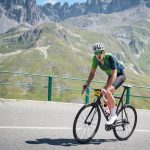
 2027 sees the Tour de France’s Grand Depart return to Great Britain for the first time since 2014 and this time it’s going to be bigger than ever.
In what promises to be a spectacular three day festival of cycling, the race crosses three countries as it travels south from Edinburgh in Scotland, via Carlisle, Keswick and Liverpool in England to finish with a stage from Welshpool to Cardiff in Wales. Along the way the routes will pass through some spectacular scenery and as a consequence another 14 British hills will now forever have the appendage ‘Côte’ attached to their names as they are added to the pantheon of Tour climbs with the likes of Alpe d’Huez and the Col du Tourmalet.
Here, Simon Warren takes a closer look at the routes for us, paying special attention to the climbs to see what the riders, and indeed the fans have to look forward to.
STAGE ONE.
Edinburgh – Carlisle. 184km. +2000m elevation.
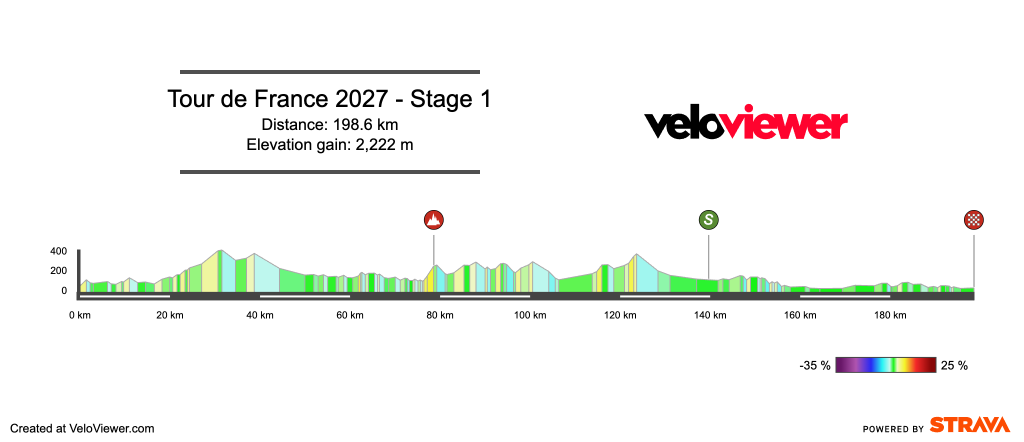
Stage one sees the race leave the cobbled streets of Edinburgh to traverse Midlothian and the Scottish Borders on a 184 kilometre journey to Carlisle on the edge of the Lake District. With incredible skill, as if threading the narrowest of needles, the route somehow manages to avoid all but one significant climb as it crosses this notoriously hilly region. Yes there are lumps and bumps and the parcour does somehow accumulate over 2000 meters of elevation but it could have been SO much tougher. There’s no Stow Hill, there’s no Tinnis Hill and worst of all there’s no Wall of Talla (which in my opinion is the most spectacular road in the Borders). Fans like me may well be frustrated by the lack of Scottish climbing but there’s very good reason the big hills have been avoided. No one wants the race decided on day one, do they! On paper this is of course a nailed on stage for the sprinters and although they’ll have to work hard to earn their chance to fight for the first yellow jersey all logic says they should make it.
Following the ceremonial exit from Edinburgh the route rises continually for around 18 km and this relentless uphill grind should provide the perfect breeding ground for a break to form. A break that will be eyeing up the solitary KOM of the day and the opportunity to be dressed in polka dots on the podium in Carlisle.
Arriving after 64 kilometres this singular classified ascent into the Eildon Hills, a once insignificant little climb will forever now be known as the ‘Côte de Melrose’. At 2.2 kilometres long with an average gradient of 6.7% it’s no monster but it does pack a serious punch at the start. Leaving the mini roundabout in the centre of town Dingleton Road narrows, then kicks up violently to a maximum of around 15% as it squeezes under the by-pass above.
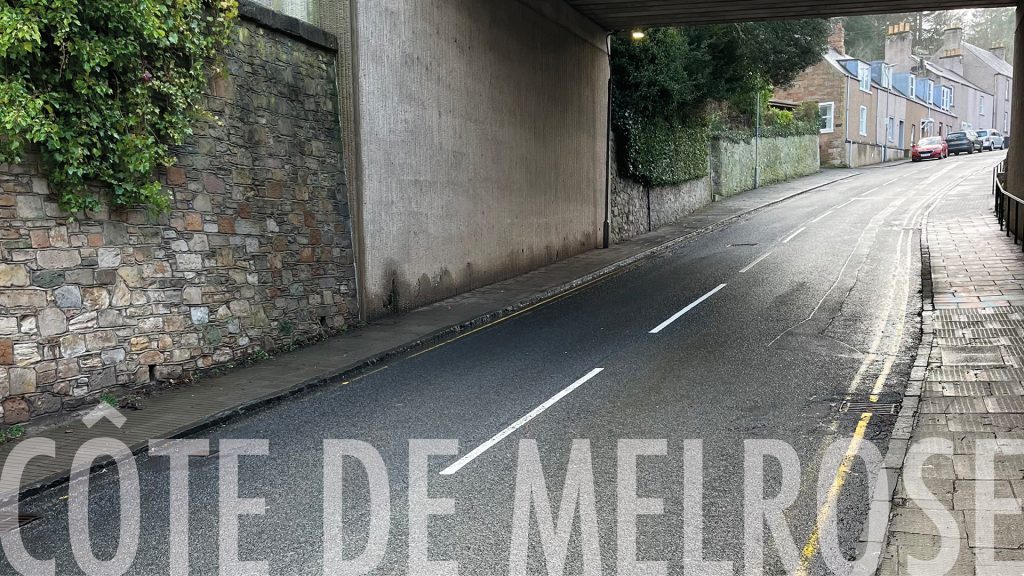
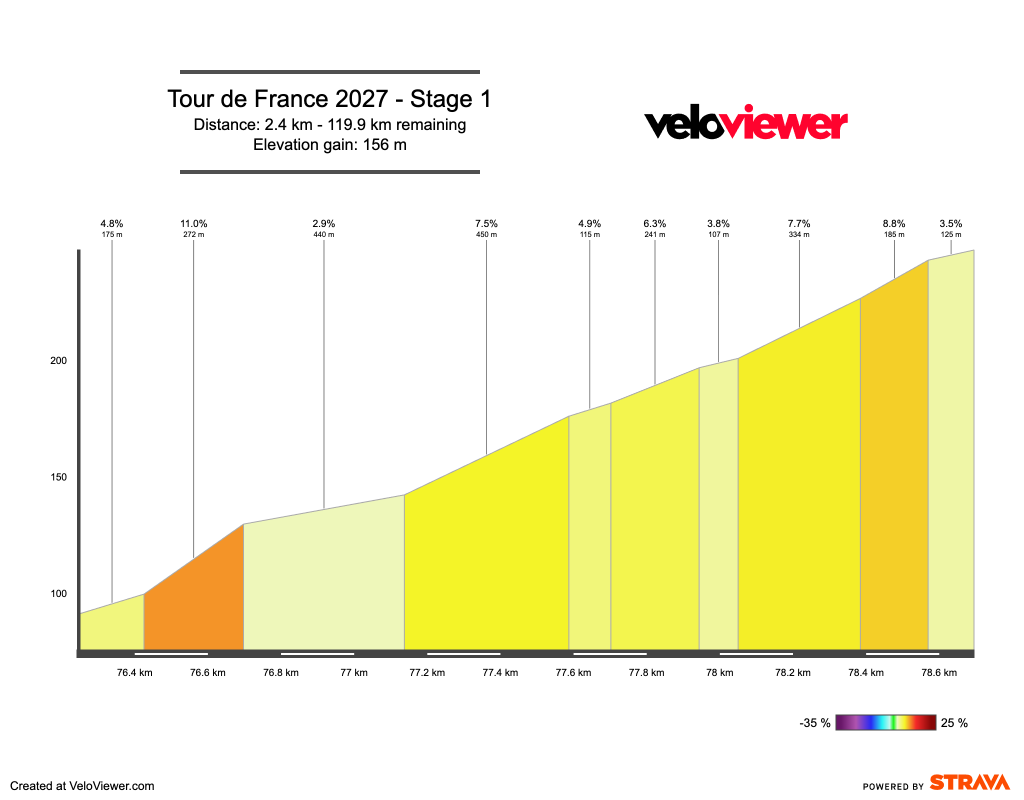
If there’s a break they should have no trouble navigating this abrupt incline but in the peloton it will be bedlam as all the GC riders try to position themselves before the pinch point. The double digit gradients are short lived though and as the road climbs the slope fades becoming gradually easier until it tips over the summit.
That’s it for the ‘big climbs’ on stage one and although the route’s modest undulations persist until around 80 km to go it’s a flat run to the line. With the end in sight it will be time for the sprint teams to mop up any stubborn escapees, get their ducks in a line and make sure their men are in place to fight for that prized first yellow Jersey.
STAGE TWO
Keswick – Liverpool 223km + 2800m elevation.
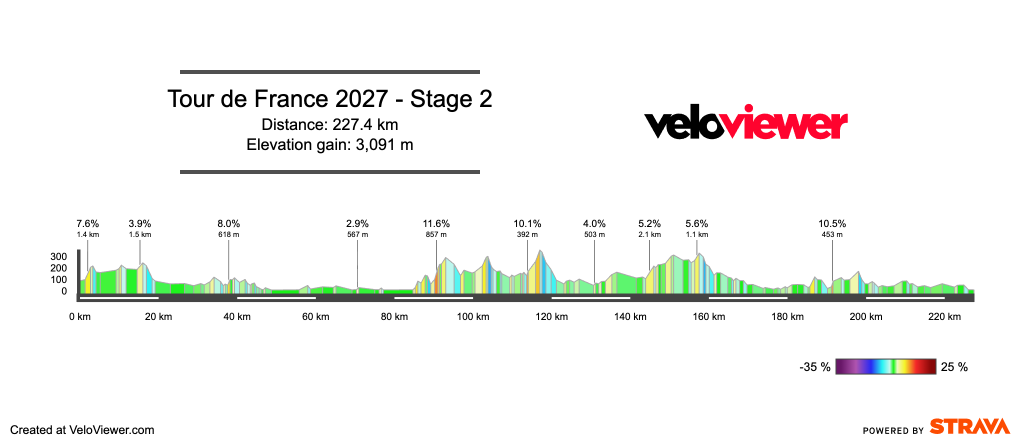
First mention of a stage starting in Keswick and all British cycling fans instantly started speculating, DREAMING of what monster Lake District climbs would be on the route. Would they send the riders up The Struggle? Or over Newlands Pass or Honister Pass, or even dare use Hardknott Pass? The choices are endless, it could be the stage to end all stages! Alas, it was non of the above. In fact the race sneaks out the back door of the Lakes with barely a meter climbed as it hugs the side of Thirlmere and Windermere, sticking firmly to the valley roads at the start of its 223 kilometre journey South.
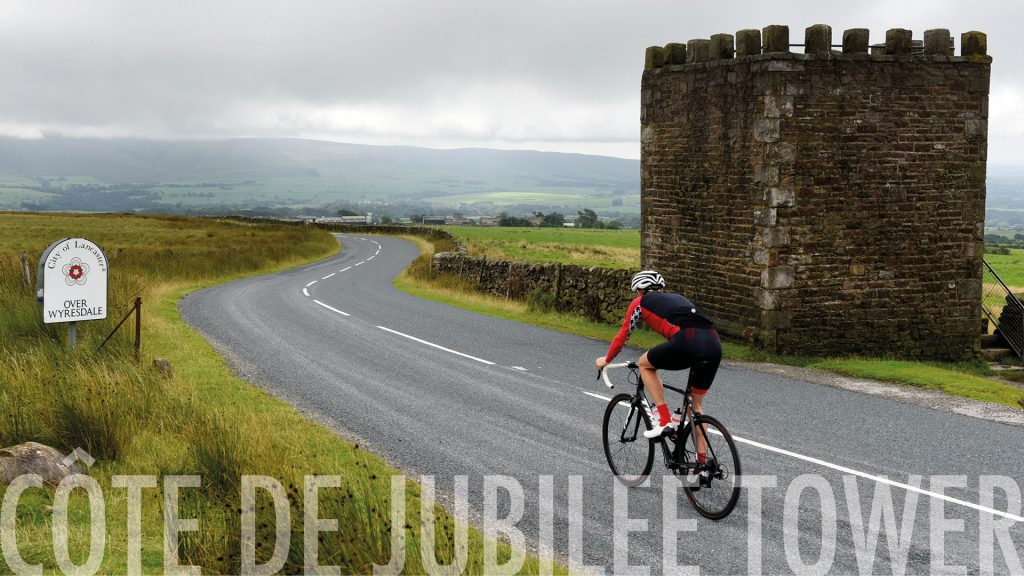
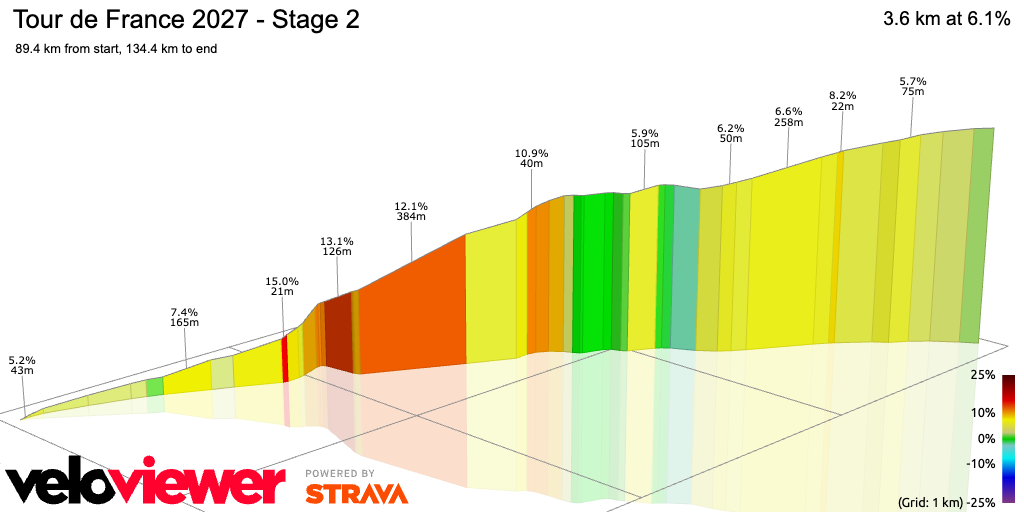
There are climbs on the stage though, significantly more than on stage one, and exiting Cumbria the route makes a bee-line for the Lancashire Fells to first take on the well known ascent of Jubilee Tower, sorry the ‘Côte de Jubilee Tower’(3.8km @ 6.1%). A climb that used to play a pivotal role in the long gone Tour of Lancashire this road peaks at 16% in places before easing to pass the rather anticlimactic tower at the summit.
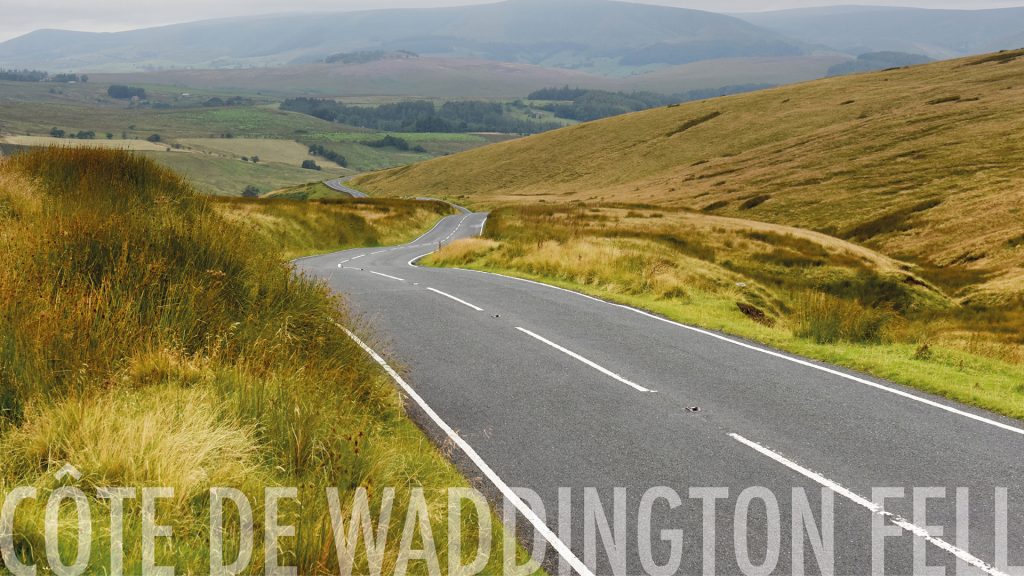
After this it’s straight onto the reverse side or ‘easy side’ of the sensationally beautiful Côte de Trough of Bowland (1.9km @ 5.2%). This ascent will hardly bother the peloton though before they descend what made this road so famous, the much steeper and far more dramatic south face. With two Lancastrian peaks in the legs it’s time to head to the third, the sweeping slopes of the Côte de Waddington Fell (3.4km @ 6.4%). This is an achingly beautiful road that meanders over the hillside, swaying slightly left and right, pitching up steeply in places then easing back to allow you to recover in others. Although they aren’t giant mountains this triple whammy of challenging ascents, the first two on narrow, technical roads through the Forest of Bowland could see the race split to pieces if they are ridden hard enough.
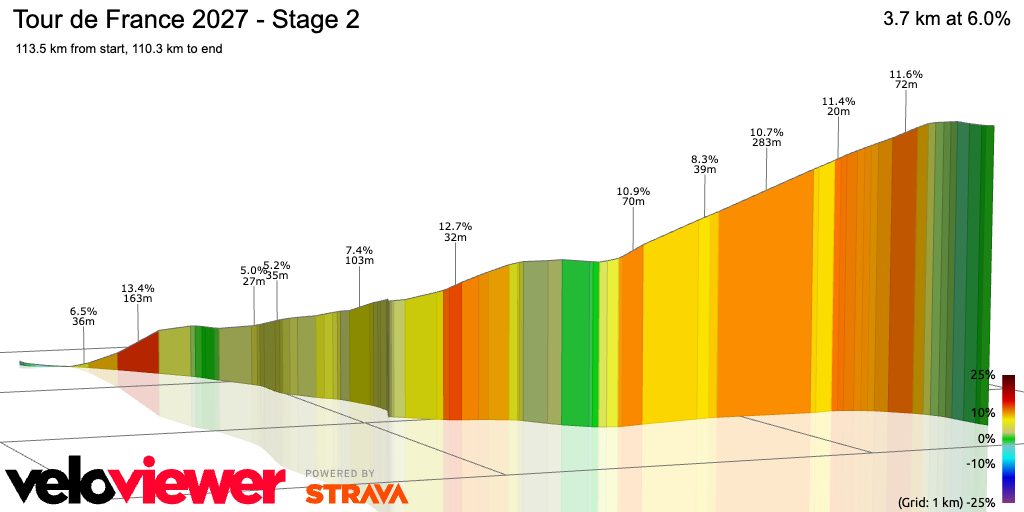
Once the peloton arrives in Blackburn with 90 kilometers left to ride we should have a good idea of how the rest of the stage is going to pan out and even though the remainder of the journey is reasonably benign there are still two more classified climbs to tick off on the run in. Both short and neither especially tough they could however prove the perfect catalyst for an attack. First up is the Côte de Belmont whose two kilometers of 4% gradient shouldn’t ruffle too many feathers but the slightly tougher Côte de Parbold (2.9km @ 5.6%) at 30 km from the line could be the ideal springboard for a classics style rider to go all-in!
If there’s still a chance for the sprinters, if they have indeed managed to navigate the perils of the Lancashire Fells intact, then expect once over this final climb for their teams to again take control of the peloton and deliver their payload onto The Strand in Liverpool to either defend or capture Yellow.
STAGE THREE
Welshpool – Cardiff. 223km +3000m elevation.
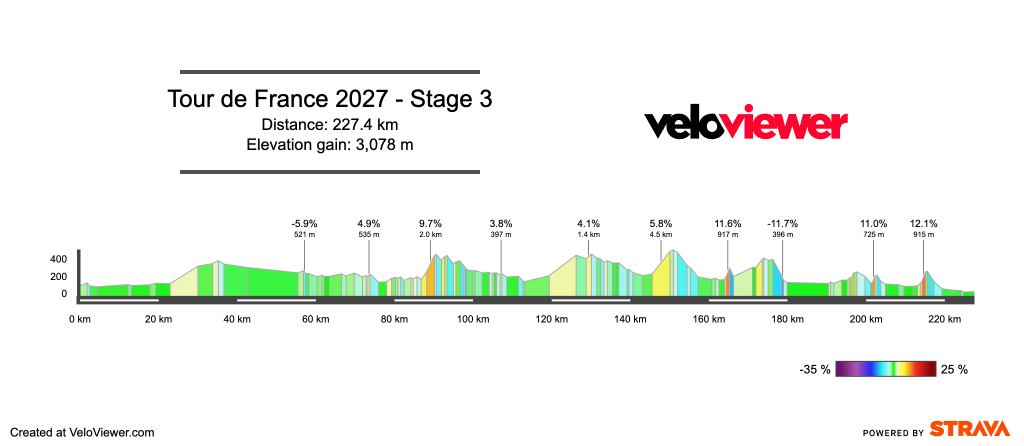
If stage one and two have left feeling a bit short changed, a bit underwhelmed, then relax, the 2027 Grand Depart culminates with an absolute banger of a route from Welshpool to Cardiff. Packed with relentless climbing across its brutal second half, the crescendo that’s been gradually building over the previous two days is set to reach a pulsating climax in the hills of South Wales.
In the style of Liege-Bastogne-Liege the consistent up and down over the last 140 kilometres will require all GC hopefuls to pay it the up most of respect. In fact it may well turn into a GC day if a certain Mr Pogačar decides to go on a rampage, and how we’d love to see a Pogi V Remco V Seixas full blown battle on home roads!
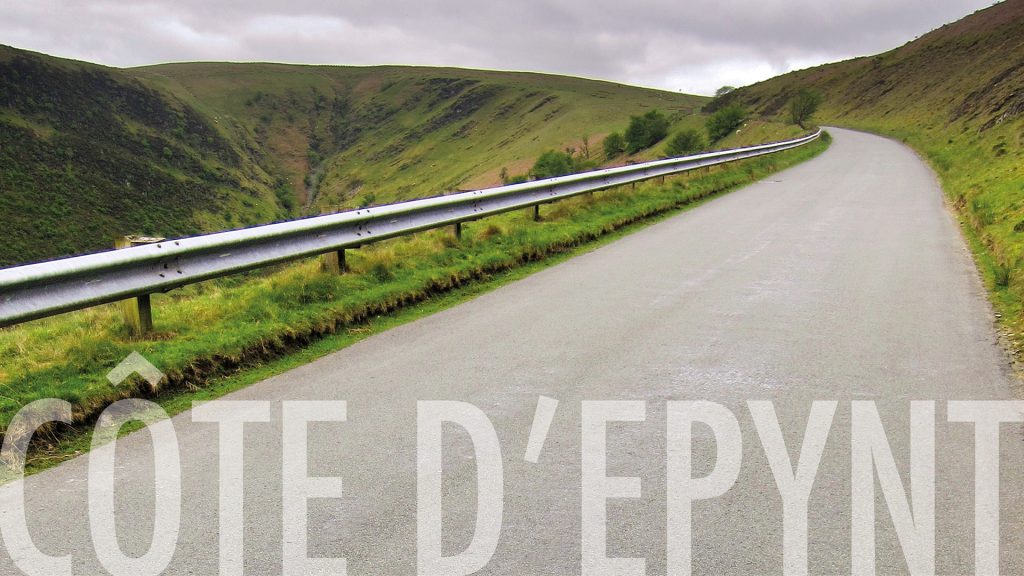
To start with the riders are afforded a grace period of around 85 kilometers as the route travels south via Newtown, Llandrindod Wells and Builth Wells before hitting the first climb, the Côte d’Epynt. This initial test of the day is a moderate 3.7 kilometres long with an average of 7.9% which leaves the village of Garth via Pennau Hill to cross Mynydd Epynt. I wouldn’t expect too much action here, there’s still a long way to go but all interested parties will now be starting to pay very good attention to what lies ahead.

There’s a gap of some 30 kilometres before the next ascent up the gentle slopes of the Côte de Bannau Brycheiniog (6.6km @ 3.5%). This wide, evenly pitched road, in the shadow of the mighty Pen Y Fan is perfect for the climbers teams to get the pace in the peloton ramped up then keep it high on the 25 kilometres mostly downhill journey to the magnificent Rhigos.
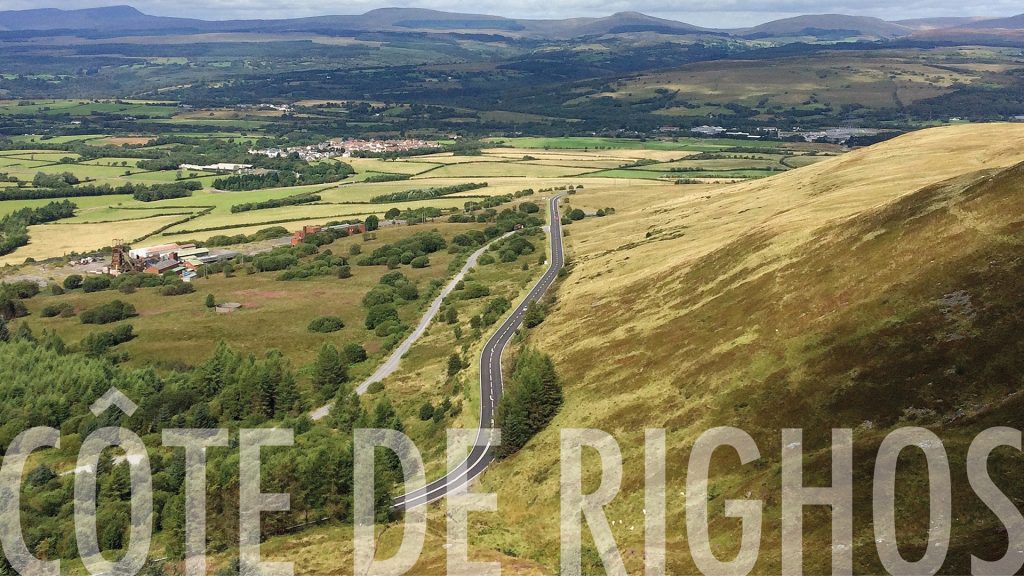
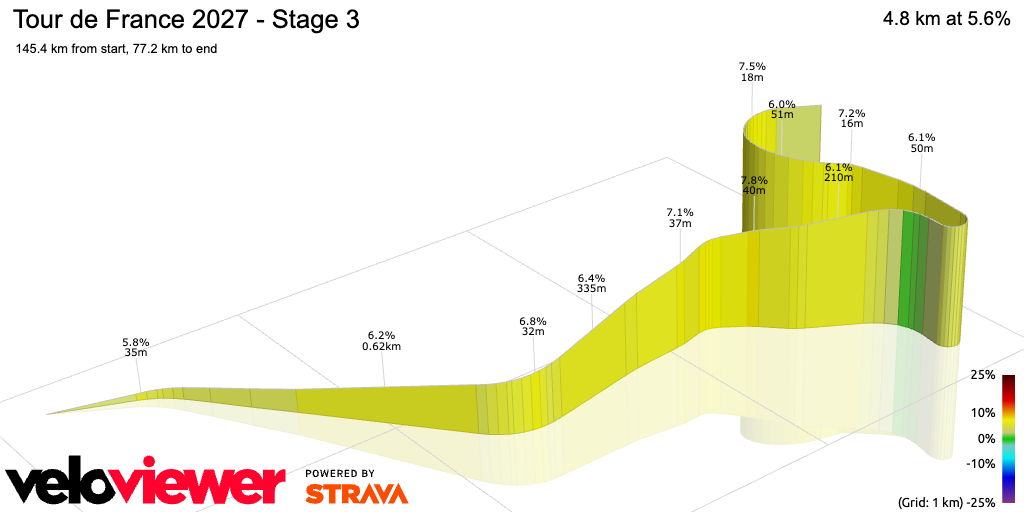
Rising out of Hirwan, the Côte de Righos climbs 4.6 kilometres on a 5.8% gradient and it’s about as close to an Alpine climb as you’ll find in Britain. OK, it’s not quite as long, or as steep as the Galibier, or Ventoux but its consistent steady gradient coupled with its spectacular views out over the Breacon Beacons, not to mention its giant sweeping hairpin almost allow you to imagine, just for a few moments that you’re in the high mountains.
Once over the summit and following the rapid descent into Treorchy the climbs now come thick and fast, and this is where I predict the stage will truly come alive, this is where we will see the fireworks. First up of the barrage of nasty ascents that await is arguably the toughest of the day, the wicked Côte de Penrhys (1.3km @10.1%). This formidable ramp rockets up from the valley floor in one remorseless straight line and is hard enough to break any rider. I wouldn’t be surprised that here, with 62 kilometres to the line we see Pogačar drop a nuke and go solo! It’s hard enough and long enough for him to dispatch the rest so if you don’t fancy getting in the scrum on the final climb and are looking for the next best place to spectate, I’d park yourself here for the day.
Once at the summit the road almost immediately drops down the other side and following this all too brief descent effectively climbs for about seven kilometres although only the final 1.5 are classified for some reason. The newly named Côte de Maerdy then plummets spectacularly down the other side via some of Wales’ finest hairpins into Aberdare.
With 30 kilometres to go there are three more peaks left to tackle, the moderate inclines of the Côte de Gelligaer (1.4km @ 4.9%), the wicked kick up the Côte de Hengoed (700m @ 11%) and to finish with the already legendary Côte de Caerphilly (2 km @ 8.1%) or Caerphilly Mountain as the locals call it. This horrible climb has been used a number of times by the Tour of Britain and it just gets steeper as it climbs. Go too early and your lights could go out, time it just right and you could cross the summit solo with just 13 kilometres left to the finish line. This climb, unless the race has already been decided (see above) could play a pivotal role in the outcome of the day and have a sizable say in who will take the Yellow Jersey back to France. It will also be the prime spectating spot so if you want a good vantage point you’ll need to get there VERY early.
It is this stage that has had fans salivating ever since it was announced and they are sure to pack the slopes of every climb at the end of what will undoubtedly be three unforgettable days of racing across British roads.