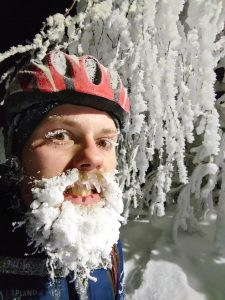
 This tiling tale takes us far north to Finland, home to tile-hunting enthusiast Pekka. To maintain his impressive five-year cycling streak, Pekka regularly battles sub-arctic conditions on his bike. As a true tiling puritan, he only rides outdoors—and with February temperatures plummeting to -30°C, his journey is a masterclass in dedication and determination.
After following his adventures on Instagram and YouTube, we wanted to delve deeper into his backstory and how he conquers these extreme temperatures and challenging terrain. Who knows, his story may even inspire a few of you to head to Finland for Pekka’s favourite ultra event, Ruska – be warned though, his tales come with words of caution!
Also there’s a bonus feature to this blog, read on to find out the new VeloViewer metric now available thanks to Pekka’s request.
Can you tell us about your cycling life, where you mostly ride, and how you make time for tiling adventures?
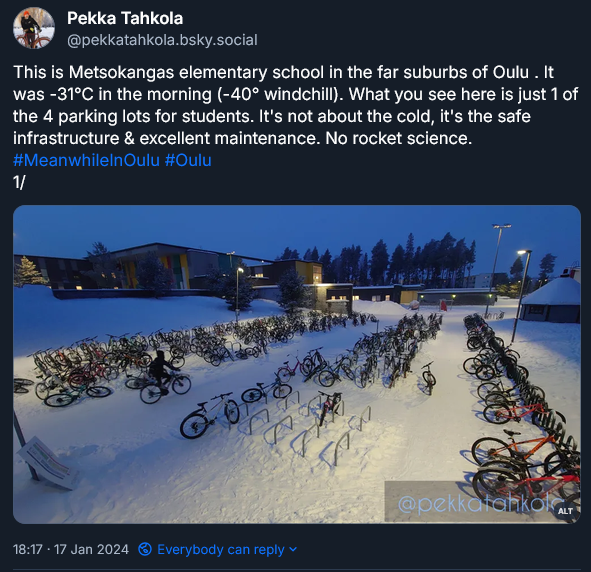
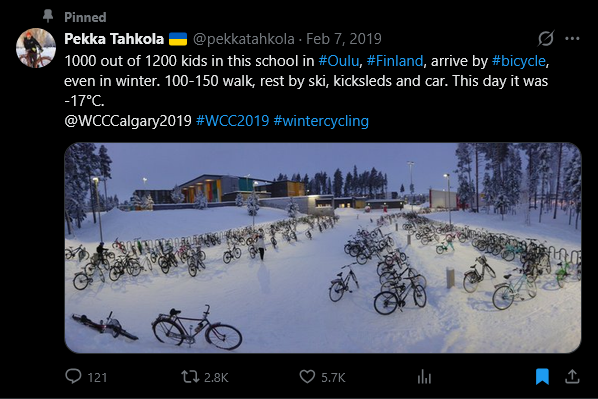
I’m an urban well-being engineer in Oulu, Finland, one of the most bicycle-friendly cities of the world. I work in a small consultancy company Navico Ltd (www.navico.fi) helping cities globally become more walking and cycling-friendly. I live and breathe cycling daily. I even get paid to do it sometimes, but more importantly, I get paid to enable others to enjoy active travel – especially in the winter. Here in Oulu, thousands of young kids independently cycle to elementary school even when it’s -30°C!
For leisure, I’m always hunting for uncovered territory, which makes VeloViewer’s explorer tiles and heatmaps invaluable. It’s a bit difficult here though, as the number of roads and even tracks and natural trails up here in the North is somewhat limited, and I’ve pretty much ridden them all already ages ago. So I’m often searching for adventures a little further away. I also love numbers and get easily motivated by them. For example, I’m currently almost five years in in my streak of cycling at least a little every single day, and only outdoors count. In addition, my streak of at least 1000 km per month is 76 months now (I challenge anyone to try our Finnish Februaries! ;)), my Eddington is 124 ml / 169 km, max square 67 x 67 and cluster 11 045 tiles. Even though these numbers are not that extreme, they still motivate me enough, and I find joy in them. I always keep a tongue-in-cheek attitude on my rides. I often seek out the silliest, most nonsensical routes that only make sense if you have the right mindset. I’m fascinated by the history of transportation networks and old maps; I’ll spend hours diving into archives, then go out and bushwhack through a thicket that most people wouldn’t realize was a major main road 100 years ago.
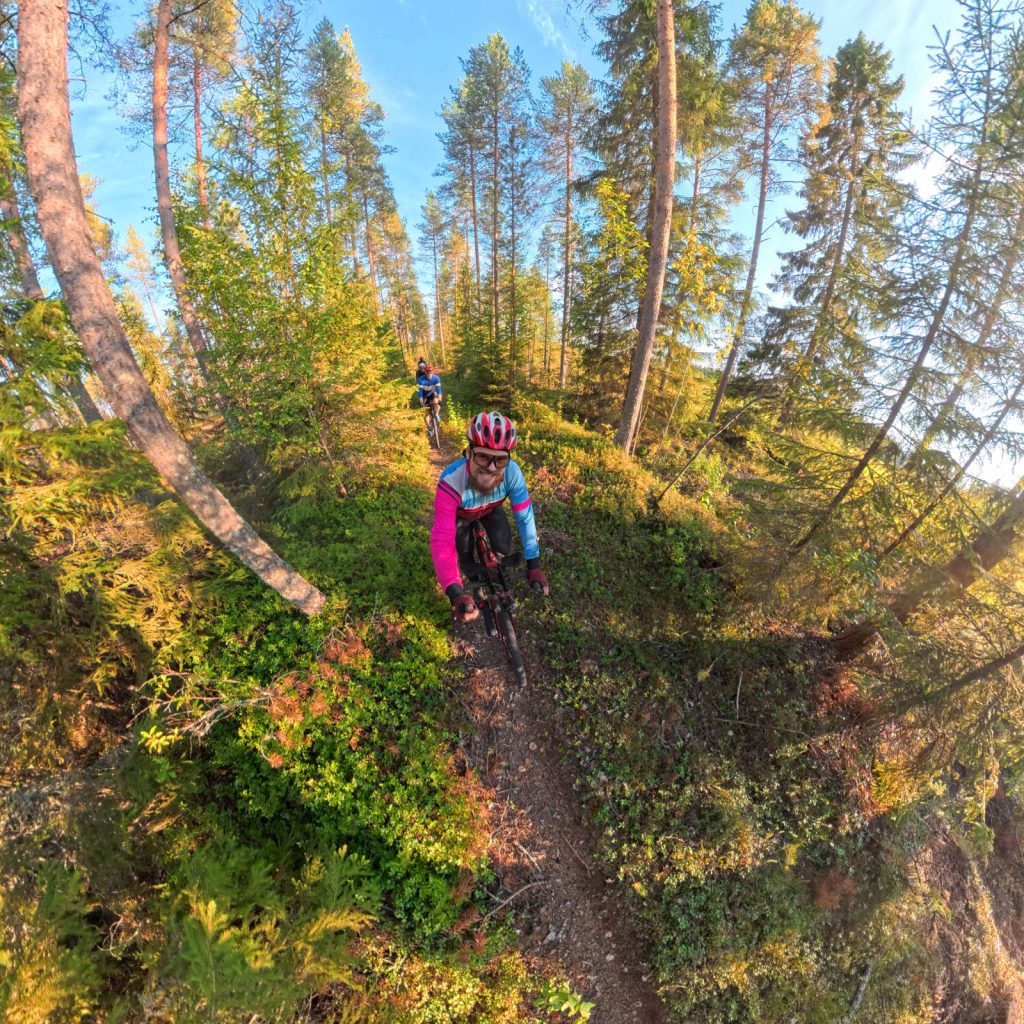
Lately, I’ve also developed a taste for ultra-distance events like Ruska—a brilliant, relatively unknown self-supported event in mid-September. It crosses Finland from south to north (and often dips into neighbouring countries), covering 2,000 to 2,200 kilometers with a strict time limit of around 8 days and 4 hours. Being in mid-September often means we might even get some lovely snowfall during the event.
Finally, I’ve set myself a unique (?) numeric goal: completing an individual ride of every single kilometer length (1 km, 2 km, 3 km, etc.). Your score is the last consecutive number before your first missing distance. Currently, I am missing a 98 km ride, so my score is stalled at 97 km. But. The next missing gap after that isn’t until 158 km. Just one precise 98 km ride will instantly rocket my score to 157 km! In mathematics, this concept is known as the Mex number (minimum excluded value). I’d seriously love to pitch that we feature this on VeloViewer’s statistics page! I’m hoping to eventually get my Mex to 200 km, and I’d really love a shiny new stat to show for it!
This is where we tell you this feature is now live on VeloViewer thanks to Pekka, so be sure to check out your Mex number in your summary page once you finish the blog.
You are 22nd in the VeloViewer Explorer Tile leaderboard which is a huge achievement, when did you first start tiling and where have you ridden to hit such a huge target?
I discovered VeloViewer in late 2017 and was instantly hooked. I had always fantasized about gamifying geographic exploration, and suddenly here was the perfect tool. My very first ride log that explicitly mentions tiling is from October 27th, 2017. It was early winter—temperatures hovering just below freezing with a light dusting of snow. I went out on my fatbike for a 126 km ride and brought home a modest 22 new tiles, expanding my cluster by 37. It wasn’t a massive haul, but that’s because I had already spent most of my life extensively exploring my surroundings anyway, always hunting for new trails and roads. VeloViewer finally gave me a way to visualize it.
As for where I’ve ridden to hit this target: geography plays a massive role up here. Being situated at 65 degrees latitude—just a stone’s throw from the Arctic Circle—means the tiles are mathematically much smaller than they are near the equator. On paper, it looks like you can rack up tiles faster per kilometer pedaled.
In reality, it’s a completely different story. Once you step outside the major towns, you are met with massive, roadless wilderness, impassable swamps, and sprawling lakes. There are countless tiles up here that contain absolutely zero infrastructure. Reaching them in the summer is virtually impossible.
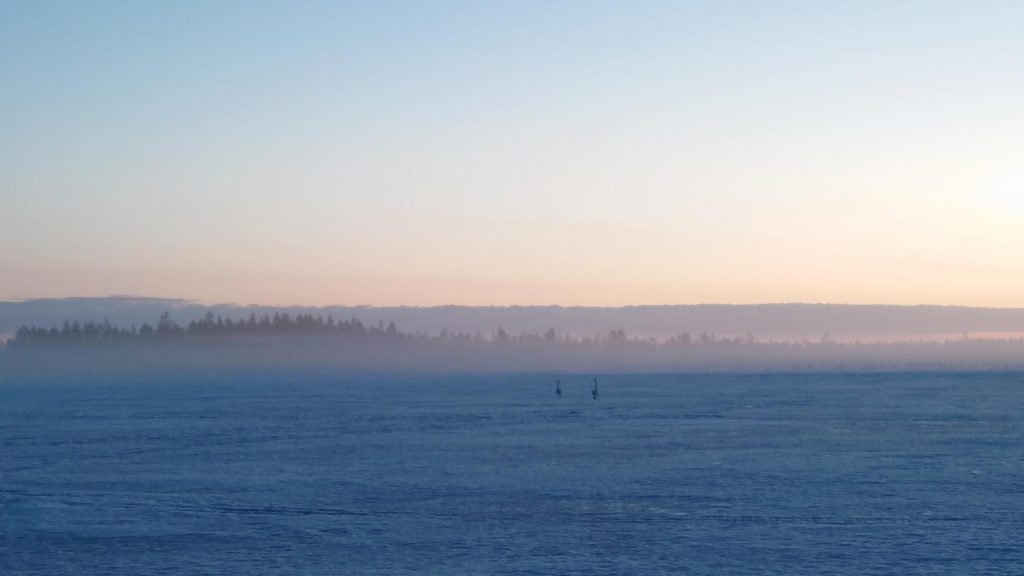
Luckily, everything freezes solid during our sub-zero winters. And that is exactly where the real magic happens…
Your tiling map is fascinating as it looks like you are able to tick off tiles in the Bothnian Bay once the sea freezes. Can you tell us more about these adventures, and when is the peak season for this?
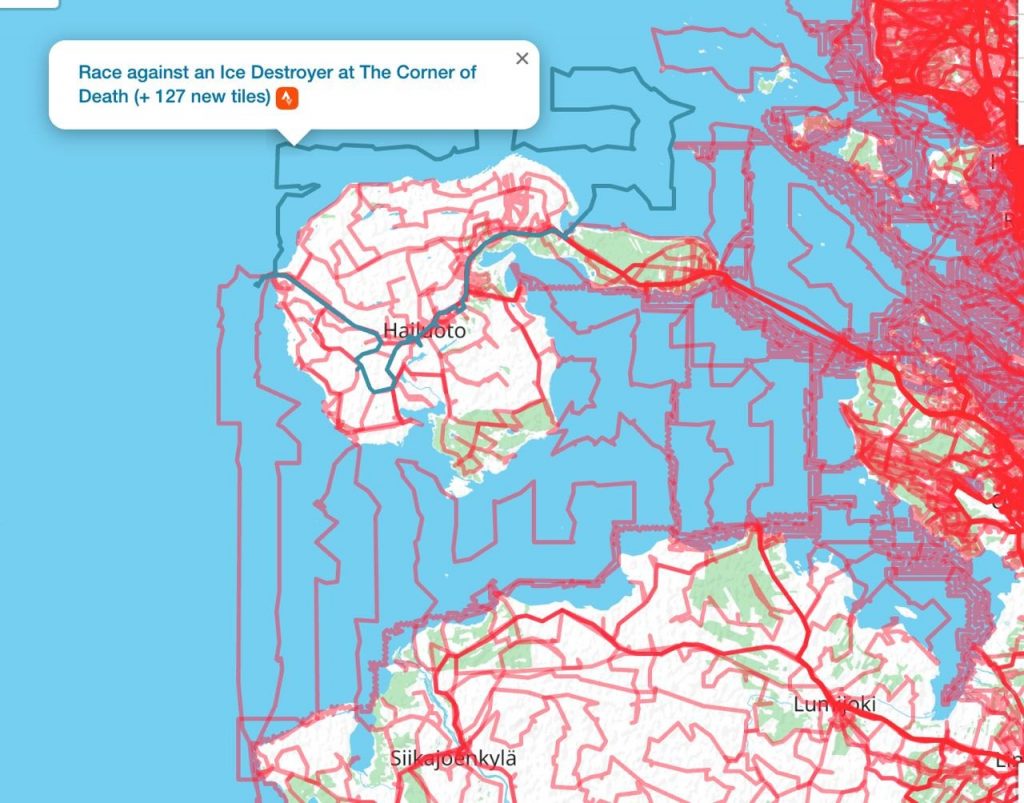
Yes! The sea usually freezes over completely, but it might not happen the way you’d expect.
For most of the winter, there is simply way too much deep snow on top of the ice, making cycling impossible. However, there are two golden windows. These windows might last for just a day or two, maybe a week or two, or they might not happen at all on any given winter. You have to actively seize the opportunity the exact moment the weather allows for it. These windows do not wait for you to finish your six-hour Teams meeting.
The first is in early winter: if the conditions align with severe cold and very little snowfall, you get a beautiful, bare sheet of ice that is perfect for studded tires. But you have to be extremely careful and also familiar with the ice conditions, since it’s early winter and the ice might not be that thick yet.
The second, and most magical, window happens in the spring. And not only over the sea. During the day, the bright sun warms up and partially melts the top layer of snow. At night, freezing temperatures turn that slush into rock-hard ice. When this cycle repeats for a few days, it creates a pristine snow crust that at best, is strong enough for even cycling on top of it.
When that happens, you can ride your fatbike absolutely anywhere in the wilderness. Literally anywhere. It is pure magic—a feeling you can’t truly understand until you experience it. You can effortlessly glide out into the middle of the frozen sea or cruise over trackless wilderness to grab tiles that are utterly unreachable during any other time of the year.
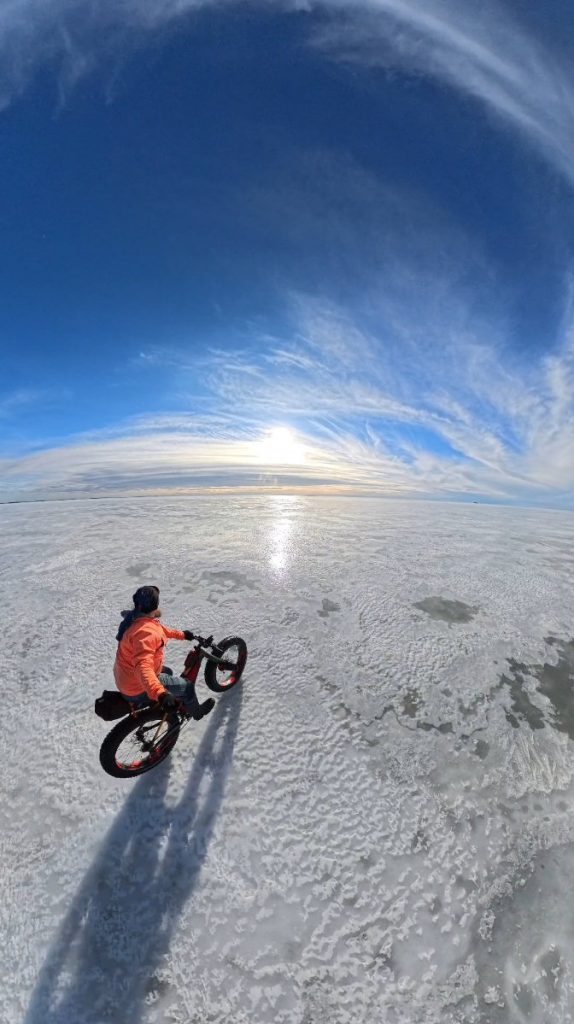
But it comes with high stakes. It can be incredibly risky. If the sun gets too warm during the day, that supportive snow crust can suddenly collapse. If it softens while you are out, you will instantly sink a meter deep with every step. In the swamps, there is often a layer of freezing water trapped right beneath that soft snow. When you are 10 kilometers away from the nearest road, a sudden thaw can turn a magical tile hunt into a very serious survival situation.
Because of these daytime thaw risks, I often find myself starting these spring tile-hunting expeditions even at 2:00 – 4:00 AM.
Navigating the frozen wilderness in the pitch black adds a whole new level of adventure, but the true reward comes at dawn. As you ride across the frozen swamps, the landscape slowly awakens to a new day. The bogs become shrouded in a magical morning mist, the black grouse begin their bubbling mating calls (teeret pulputtavat), whooper swans start honking in the distance, and the cranes begin to sing.
It is just utterly otherworldly. It’s one of the very few ways to experience such beauty, and being there so early ensures the snow stays strong enough, sometimes just barely strong enough, beneath your tires until you make it back to solid safety after collecting the impossible tiles.
How do you manage riding in the extreme cold?
Simple. By putting on clothes 😉
More seriously: I have cycled in -41°C under magnificent northern lights. I would love to cycle in even colder conditions, but I haven’t yet been so lucky!
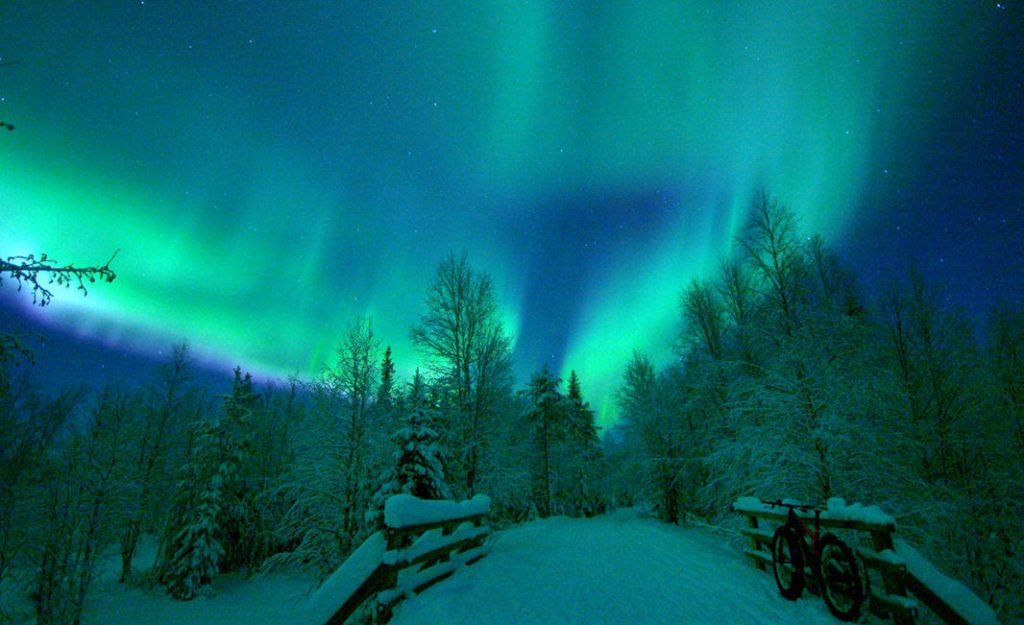
Even though I absolutely love cold weather and proper winters and would never want to move to a warmer climate, the cold and its dangers of course need to be taken seriously.
Finding SPD shoes that keep you warm, or gloves that preserve some finger dexterity, is a notorious challenge. Personally, I don’t like using pogies (bar mitts) or flat pedals with heavy winter boots on my adventures, even though they would help. Instead, alongside my regular Lake 303 and 400 winter shoes (which I size up to allow room for extra insoles and thick wool socks), I use custom, handmade SPD shoes. They are excellent down to below -30°C, and I can survive in them even below -40°C.
If your toes do start to freeze, the secret is simple: get off the bike and run for a minute or two, and you’re good for another 30 minutes. And I mean run—like you are running for your life. That explosive effort forces the warm blood all the way down to your toe tips. If you just walk or casually jog, it takes way too long.
The other golden rule when it’s properly freezing is to avoid getting sweaty. And if you do get sweaty, do not stop. Wet clothes combined with extreme Arctic temperatures are a dangerous combination.
That said, our typical winter temperatures of -5°C to -20°C feel completely mild to us; for regular daily errands, you just wear whatever you’d normally wear for a walk. I can easily pedal for hours in -20°C with just one extra layer on my legs, a thin merino longsleeve, and a lightweight down jacket on my upper body. You just have to go out and acclimatize. I suppose that acclimation works the other way around for heat, too—but for me, a summer day at +25°C is already way too hot!
What have been the most challenging tiles to reach, and how do you maximise new tiles per activity?
Even though the sea usually freezes solid, we still have frequent marine cargo traffic travelling to/from our seaport. I sometimes joke those ships with the help of ice breakers are my biggest tiling enemy 😉 So there are ice breaker paths on the sea, that stay open round the year. Getting close to them, you have to be very, very careful and also of course properly equipped in case you go through the ice. Temperatures here frequently dip below -30 °C, and falling through ice is no joke.
So there’s one specific tile located in the port area where our biggest river delta meets the sea. The access is very restricted and in addition, there’s moving water and frequent marine traffic that make sure the water pretty much never freezes thoroughly. In addition, two ice breaker paths going to different directions on the open sea mean that there’s a huge area of tiles on the sea always left between the two. So you need to find a way to cross an ice breaker path, and then also get back from there, preferably alive. I seriously do not recommend even thinking about that.
Fortunately, most of my tiling adventures don’t involve cheating death in frozen shipping lanes. Most of them just involve the pure, unadulterated joy of exploring places where no sane cyclist has been for a century. And to be clear: with my maps and data, I never get lost. I am always exactly where I intend to be.
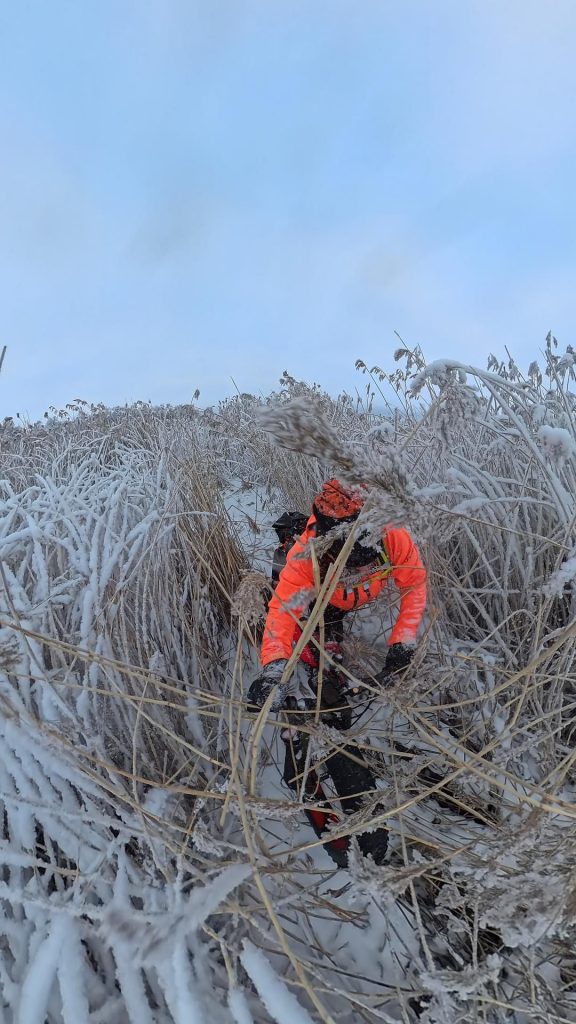
If there is one thing I want to leave you with, it’s this: don’t let a lack of infrastructure stop you from exploring. If a map tells you a road existed 100 years ago, go look for it. Sure, you might end up carrying your bike through a waist-deep Arctic bog while being swarmed by millions of bloodthirsty summer mosquitoes, but that is precisely what we Finns call a lovely Tuesday afternoon.
Get out there, embrace the ridiculous routes, keep an eye on your numbers, and remember: if your toes feel like they’re about to fall off, just run like your life depends on it.
You can follow more of Pekka’s extreme adventures on Instragam and YouTube.
Steve Smith says:
Brilliant account, thank you. I have followed you on Strava for several years and am in awe of your knowledge of your environment. Now I am better placed to know what goes on beyond your stunning photos.
Gordon says:
Amazing stuff. The word kudos seems rather…inadequate for this kind of riding!
Edwin says:
I noticed the new metric in my Eddington numbers. Assuming I missed an announcement I started reading the blog and so happy I did because this is an amazing story and achievement! And kudos for dreaming up another statistic for Ben to implement. I’m at 116 and will try to hit that this week.
Can it be added to the infographic? Overall leaderboards?